Wedding Ring: Left Hand or Right Hand?
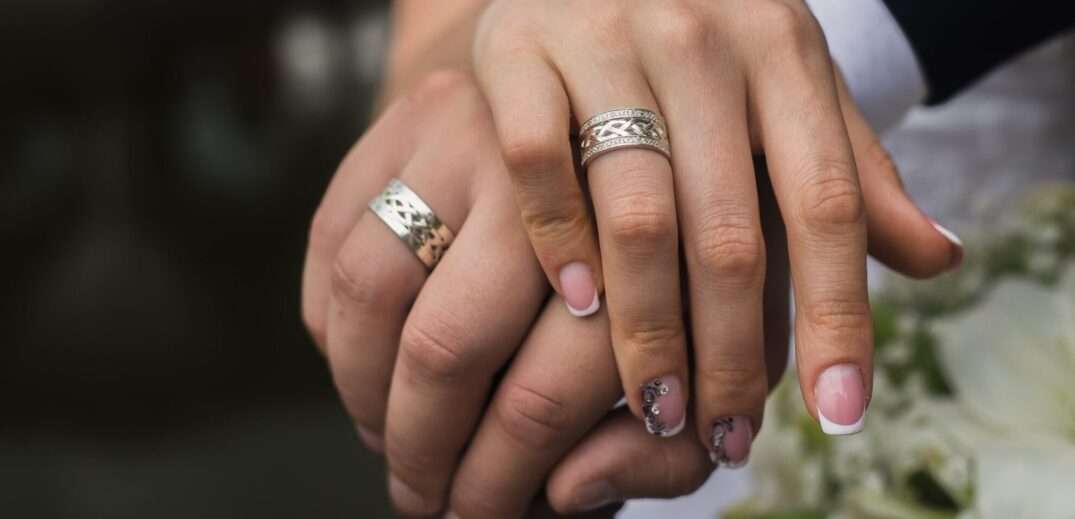
The history of wedding rings: which hand spouses wear their rings on in different countries and why.
Few modern people think about following one tradition or another. Yet most beliefs are our invisible companions every day throughout our lives. One of the most interesting traditions is related to the wedding ring. In some countries, spouses wear this jewelry on their left hand, while in others on their right. What causes such differences?
First, a few words about why the ring finger was chosen specifically for the wedding ring. The history of this tradition dates back to Ancient Egypt and the early Roman Empire. It was believed that a special nerve or vein passed through the ring finger, connecting it to the heart. By putting jewelry on it, a person demonstrated to others the presence of their chosen one.
Why in some countries wedding rings are worn only on the right hand

Once again, history takes us back to the traditions of Ancient Rome. It was there that people considered the left hand unreliable and unlucky, so the right wrist was deemed worthy of the wedding ring. Thus, the Romans became the first adherents of this tradition.
In India, spouses were previously allowed to wear rings exclusively on their right hand, as the left was called unclean. However, today the tradition has become more lenient. Now the jewelry can be worn as people find comfortable.
There are also countries where rings are usually worn on the left hand before marriage and on the right after. Bright examples are Netherlands and Germany. This symbolizes a change in the couple’s social status.
In Israel, the bride is first given a ring on the index finger of her right hand, as it is considered the main finger. After the wedding ceremony, the girl wears the jewelry on her ring finger.
Wedding rings are worn on the right hand in: Russia, Colombia, Norway, Greece, Georgia, Venezuela, Austria, Serbia, Poland, Ukraine, Bulgaria. This list includes Belgium, Portugal, Cuba, Latvia, Spain and Peru, Denmark and Hungary.








Where wedding rings are worn on the left hand
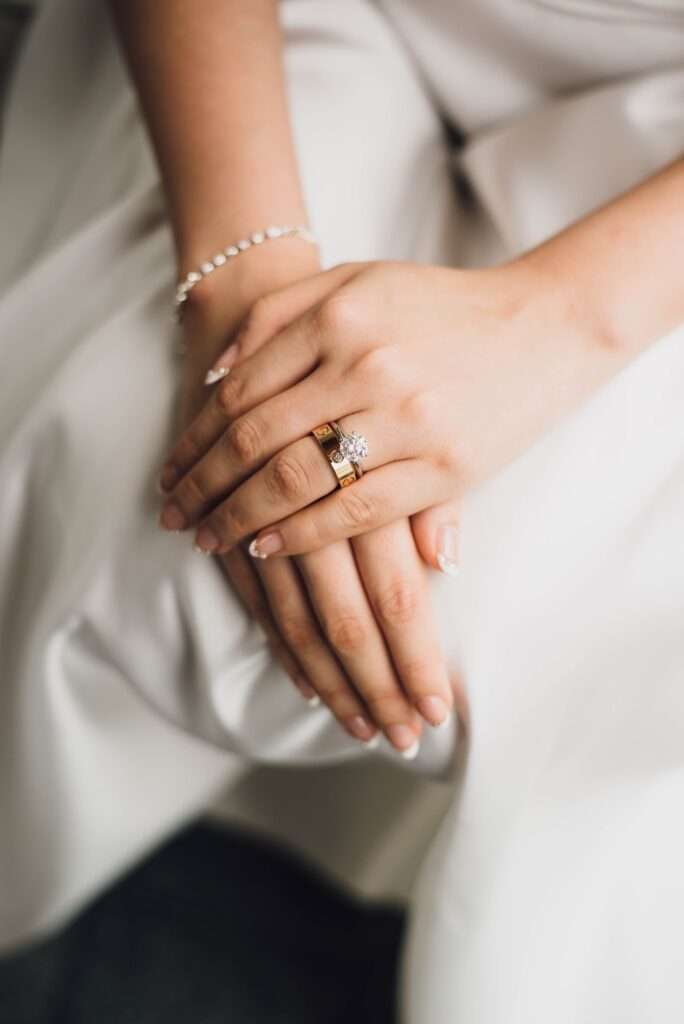
This tradition emerged at the beginning of the 18th century. In 1869, an article was published stating that changing hands was recognized as a symbol of respect for the husband. At that time, the husband did not wear a ring, as it was considered a woman’s prerogative.
In Brazil, Turkey, Lebanon, and Syria, there is a tradition of changing hands after the wedding ceremony. Before marriage, the jewelry is on the right, and after marriage – on the left.
Countries where wedding rings are worn only on the left hand: Sweden, France, USA, Australia, Croatia, South Africa, Egypt, United Kingdom, Botswana, New Zealand, Canada, Ireland, Slovakia, Switzerland, Finland, Czech Republic, and most of Asia.














Some interesting facts
In Sri Lanka, spouses wear rings on different hands. The husband – on the right, the wife – on the left. But in most Muslim countries, this jewelry is not part of wedding traditions at all. However, if spouses do exchange rings, they can wear them either on the left hand (for example, in Iran) or on the right (in Jordan).
History tells us that before World War II, men most often did not wear wedding jewelry at all. But when soldiers had to be away from their families, they wore rings as a reminder of their beloved woman.
In countries where the marriage symbol is worn on the left, after the death of one spouse, many move it to the right hand. This is done as a sign of memory and spiritual connection with the deceased.
If you’re unsure about the size of your wedding ring or your partner’s ring size. On the main page of the website, measure your ring or the finger on which you plan to wear the ring online.
(function(w, d, n, s, t) { w[n] = w[n] || []; w[n].push(function() { Ya.Context.AdvManager.render({ blockId: “R-A-668043-4”, renderTo: “yandex_rtb_R-A-668043-4”, async: true }); }); t = d.getElementsByTagName(“script”)[0]; s = d.createElement(“script”); s.type = “text/javascript”; s.src = “//an.yandex.ru/system/context.js”; s.async = true; t.parentNode.insertBefore(s, t); })(this, this.document, “yandexContextAsyncCallbacks”);